Tudor Childhood: A Glimpse into Family Life & Upbringing
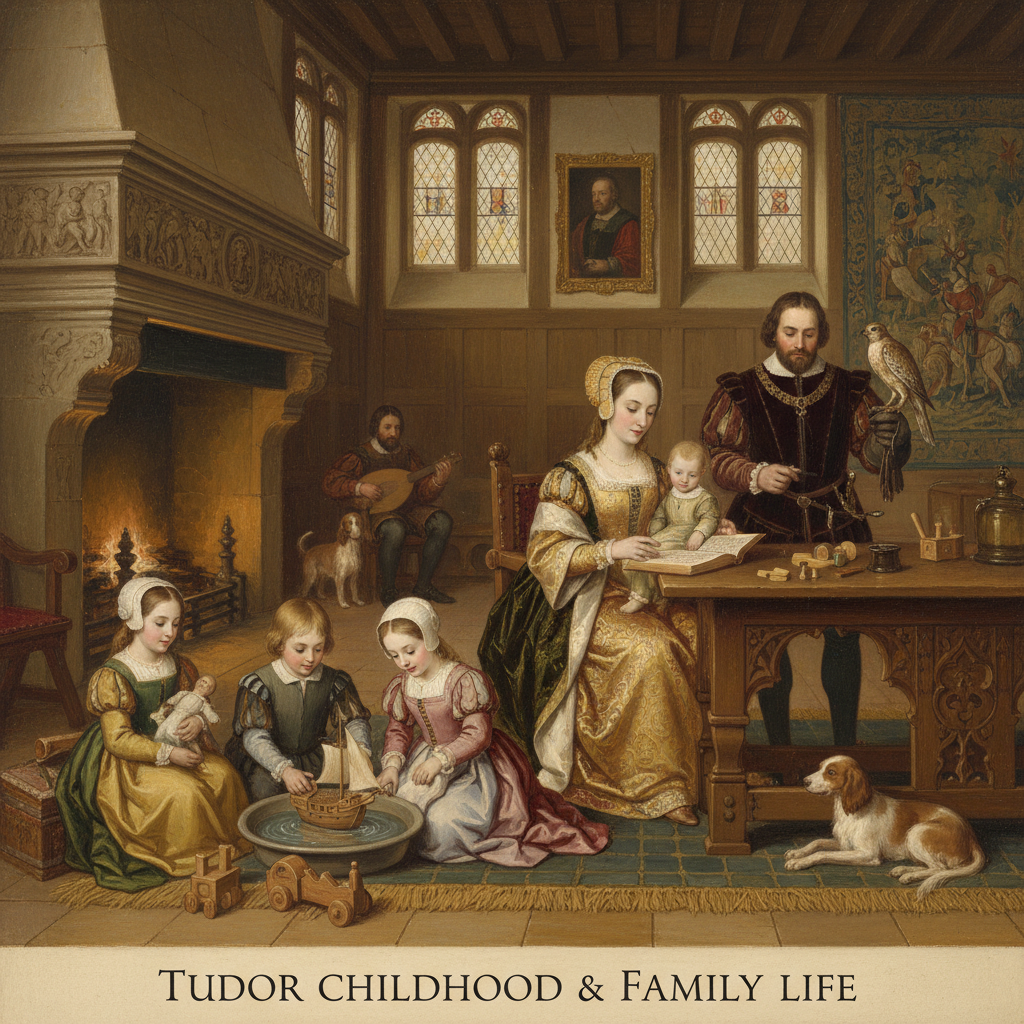
When we envision the Tudor era, our minds often conjure images of powerful monarchs, grand palaces, and political intrigue. Yet, behind the velvet curtains and battlefields lay the very foundation of society: the family. Tudor childhood and family life were remarkably different from our modern experiences, shaped by strict social hierarchies, religious dogma, and the ever-present specter of disease. Far from being a period of carefree innocence, childhood in Tudor England was a rigorous preparation for adult life, often short-lived and always demanding. Let us journey back to explore the fascinating, and sometimes harsh, realities of growing up in the age of the Tudors.
The Cradle and Beyond: Infancy and Early Childhood
For a Tudor child, life began with uncertainty. Infant mortality rates were appallingly high, with estimates suggesting that as many as one in three children might not survive to their first birthday. Superstition and rudimentary medical knowledge meant that many ailments went untreated or were treated with ineffective remedies. Baptism, usually within days of birth, was a crucial rite, not just for religious salvation but also for social recognition.
Newborns were often tightly swaddled, a practice believed to protect their limbs and ensure proper development. Wet nurses, particularly among the wealthier classes, were common, allowing mothers to recover and often to conceive again more quickly. This practice, while practical, sometimes led to emotional detachment between mother and child, though many mothers remained deeply involved in their children's upbringing. Play, though less structured than today, was present. Children played with simple toys like dolls, wooden horses, and hoops, mimicking the adult world around them.
Did You Know?
Royal children, like the future Elizabeth I, had their own elaborate households from birth, complete with governesses, nurses, and a retinue of servants. Elizabeth's household alone numbered over 100 people when she was a toddler!
The Role of Parents and Godparents
Parents, especially mothers, were primarily responsible for the moral and religious instruction of their young children. The father, as the head of the household, held ultimate authority. Godparents, chosen at baptism, played a significant role, often acting as spiritual guides and sometimes as guardians if the parents died. This network of kinship and spiritual ties was vital in a society without state welfare.
"Children were to be seen and not heard," was a common sentiment, reflecting the expectation of obedience and respect for elders. However, this does not mean a lack of affection, but rather a different expression of it.
Education and Apprenticeship: Preparing for Adulthood
As Tudor children grew, their path diverged significantly based on their social standing. Education was not universal, but its importance was increasingly recognized, particularly after the Reformation which emphasized individual scripture reading.
Noble and Gentry Children
Children of the nobility and gentry often received an extensive education, though it was gendered. Boys might attend grammar schools, often founded by wealthy benefactors, where they studied Latin, Greek, rhetoric, and arithmetic. Later, some might proceed to universities like Oxford or Cambridge, or even travel abroad. Girls, on the other hand, were typically educated at home by tutors, focusing on household management, music, dancing, languages (especially French), and needlework – skills deemed essential for running a large estate and attracting a suitable husband. Royal women, like Mary I and Elizabeth I, were notable exceptions, receiving educations comparable to their male counterparts.
Commoners and the Working Class
For the vast majority of Tudor children, formal schooling was limited or non-existent. Their education was practical, learned through participation in the household and community. Boys would often follow their fathers into trades like farming, carpentry, or weaving, learning skills from a young age. Girls would assist their mothers with domestic duties, spinning, weaving, cooking, and childcare. Apprenticeships were a common route for both boys and girls, starting as young as seven or fourteen, where they would live with a master and learn a trade for several years, often until their early twenties. This system provided vocational training and a pathway to independence.
Discipline, Play, and Pastimes
Discipline in Tudor times was often strict, reflecting the belief that children were inherently sinful and needed firm guidance. Corporal punishment was common and widely accepted, both in homes and schools. Yet, it wasn't all stern lectures and beatings. Play was an integral part of childhood, though often intertwined with learning and chores.
- Games: Children played with marbles, tops, kites, and battledore and shuttlecock (an early form of badminton).
- Storytelling: Folk tales, legends, and religious stories were passed down orally.
- Festivals: Seasonal festivals and religious holidays provided opportunities for communal celebration, feasting, and games.
- Music and Dance: Singing and dancing were popular pastimes across all social classes.
Children were also expected to contribute to the household economy from a young age. Even young children might be tasked with simple chores like fetching water, tending animals, or helping in the fields, instilling a strong work ethic early on.
Marriage and Adulthood: The Swift Transition
The transition from childhood to adulthood was much swifter in the Tudor period than today. Legally, girls could marry at 12 and boys at 14, though in practice, marriages often occurred later, particularly among the common folk who needed to establish themselves financially. For the nobility, marriages were strategic alliances, often arranged by parents for political or economic gain, with little regard for personal affection. Love, if it developed, was considered a bonus.
Upon marriage, a young person was considered an adult, taking on the full responsibilities of running a household and raising a family. The cycle of life, with its joys and hardships, would then begin anew for the next generation.
Conclusion: A Legacy of Resilience and Adaptation
Tudor childhood and family life, while seemingly harsh by modern standards, fostered resilience, practicality, and a strong sense of community. Children were not merely miniature adults but integral members of a household and society, learning their roles and responsibilities from a tender age. From the swaddled infant to the young apprentice, each stage of Tudor childhood was a vital preparation for a life that demanded courage, faith, and hard work. Understanding these foundational experiences helps us to appreciate the complex tapestry of Tudor England, revealing the human stories that underpin the grand narratives of kings and queens. What aspects of Tudor family life do you find most surprising or relatable?
TAGS
Discussion
Loading comments...
You May Also Like
Continue exploring Tudor history with these related articles

Justice and Terror: Unmasking Tudor Crime and Punishment
Explore the brutal reality of Tudor justice, from petty theft leading to the gallows to the horrific spectacle of high treason executions. Discover how the Tudors used public terror and a vast network of JPs to maintain absolute control over a volatile society.

Behind the Scenes: Life of Tudor Servants and Household Staff
Explore the complex, hierarchical world of Tudor servants and household staff. From the politically powerful Grooms of the Stool to the tireless workers Below Stairs, discover how this vast, unseen workforce maintained the machinery of the royal court and noble houses, revealing a vital layer of Tudor society.

Sovereigns of the Sea: Tudor Ships and the Age of Exploration
Explore how Tudor ships, from Henry VIII's massive carracks to Elizabeth I's streamlined galleons, fueled England's transformation into a naval power, driving exploration, privateering, and the defeat of the Spanish Armada.

The Root of the Realm: Tudor Agriculture and Farming
Explore the vital role of Tudor agriculture, from the medieval open-field system to the disruptive rise of enclosure, and discover how farming shaped the economy and society of 16th-century England.