Anne of Cleves: Beyond the 'Flanders Mare' Myth
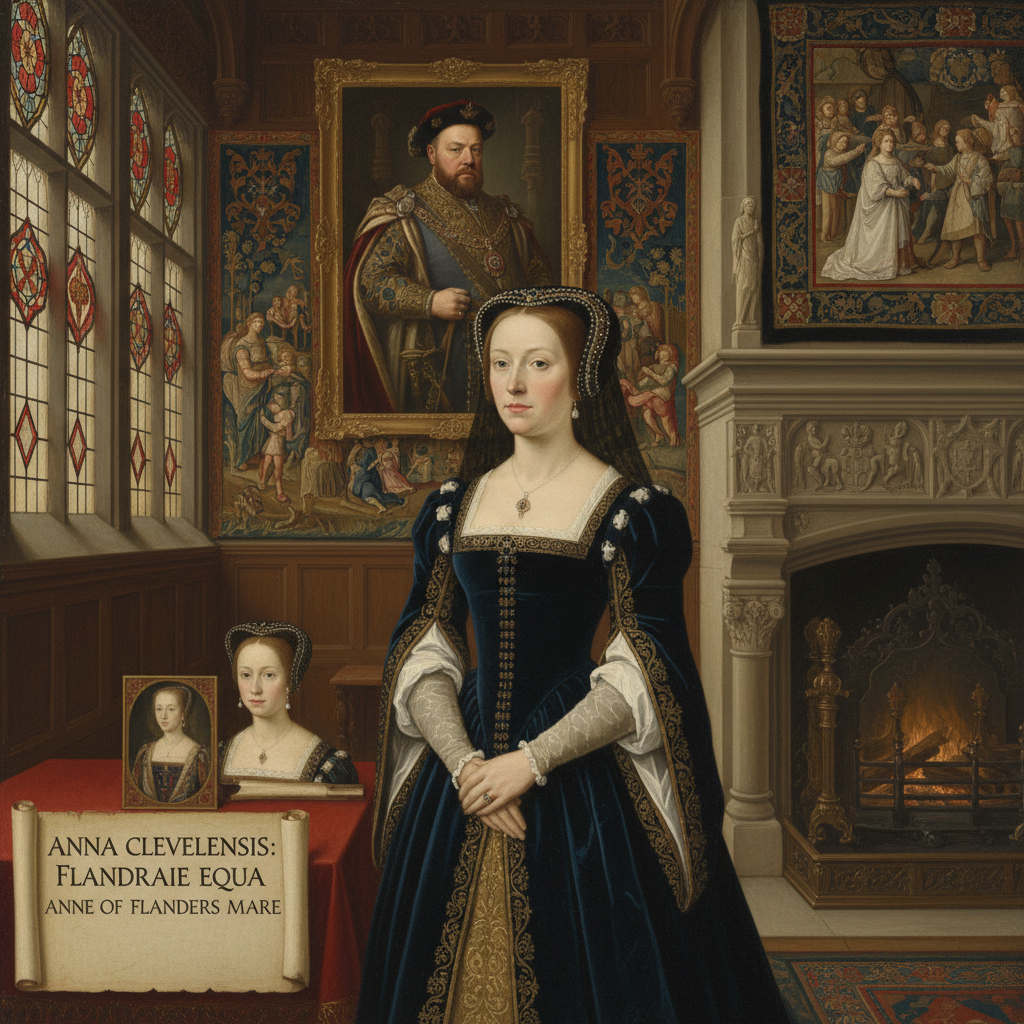
In the annals of Tudor history, few figures are as misunderstood or unfairly caricatured as Anne of Cleves. Often dismissed as the 'Flanders Mare' – a cruel epithet supposedly coined by Henry VIII himself – her story is far richer and more complex than this singular, unflattering label suggests. While her marriage to the notoriously fickle king lasted a mere six months, Anne's intelligence, adaptability, and ultimate survival in the treacherous Tudor court paint a portrait of a woman far more astute than history often gives her credit for. Her tale is one of political maneuvering, personal dignity, and a remarkable ability to navigate the perilous waters of royal matrimony.
The Unlikely Union: Henry VIII's Quest for a Queen
Following the tragic death of Jane Seymour in 1537, Henry VIII, now in his late 40s and increasingly corpulent, was desperate for a new queen. His primary motivations were clear: a legitimate male heir to secure the Tudor dynasty and a strategic alliance to bolster England's position in a volatile European landscape. With Catholic powers like France and the Holy Roman Empire looming, a Protestant alliance seemed prudent. Thomas Cromwell, Henry's chief minister, championed the cause of Anne, sister of William, Duke of Cleves, a powerful German Protestant prince.
The Political Chessboard
The Duchy of Cleves, situated strategically on the Rhine, offered a crucial Protestant counterweight to the Catholic Habsburgs and Valois. Cromwell, ever the pragmatist, saw Anne as the perfect pawn in this grand political game. The marriage was not about love or even personal compatibility; it was a calculated diplomatic move to secure England's future. Henry, however, had his own expectations, largely shaped by the romantic ideals of courtly love, which often clashed with the realities of dynastic unions.
The Portrait and the Promise
Before any royal marriage, it was customary for the prospective bride to be painted. Hans Holbein the Younger, Henry's court painter, was dispatched to Cleves to capture Anne's likeness. His portrait depicted a woman of serene beauty, with a high forehead, delicate features, and modest attire. This painting, now housed in the Louvre, was Henry's primary visual reference. It was widely believed to be an accurate and flattering portrayal, setting Henry's expectations high. However, the conventions of portraiture at the time often idealized subjects, and Holbein, keen to please his king, likely presented Anne in her best possible light, perhaps even enhancing her features.
“The King liked her not, and swore she had a great foul neck, and that he had never seen such a great woman.”
– Eustace Chapuys, Imperial Ambassador, on Henry VIII's initial reaction to Anne of Cleves
A Disastrous First Impression: The 'Flanders Mare' Emerges
The fateful meeting between Henry VIII and Anne of Cleves occurred on New Year's Day, 1540, at Rochester. Henry, eager to surprise his bride-to-be, disguised himself and burst into her chambers. He expected a joyous recognition, a romantic embrace. What he received, however, was confusion and perhaps even alarm from Anne, who, unfamiliar with English customs, did not recognize the disguised king. This awkward encounter set a disastrous tone for their relationship.
TAGS
Discussion
No comments yet
Be the first to share your thoughts on this article!
You May Also Like
Continue exploring Tudor history with these related articles

Catherine of Aragon: The Spanish Princess Who Defined the Tudor Era
Explore the life of Catherine of Aragon, the Spanish Infanta whose marriage to Henry VIII and subsequent refusal to accept an annulment triggered the English Reformation and defined the Tudor era.

The Sickening Truth: Medicine and Health in Tudor England
Dive into the precarious world of Tudor medicine, exploring the reliance on the Four Humours, the terrifying reality of the plague, and the often-dangerous treatments used by physicians, surgeons, and apothecaries in 16th-century England.
Anne Boleyn: Rise, Reign, & Tragic Fall of a Tudor Queen
Explore the captivating and tragic story of Anne Boleyn, from her sophisticated upbringing and meteoric rise as Henry VIII's second queen to her dramatic downfall and execution, forever changing England's history.

The Boleyn Ascent: How a Norfolk Family Conquered the Tudor Court
Explore the astonishing three-generation rise of the Boleyn family, from ambitious London merchants to the pinnacle of power, culminating in Anne Boleyn's controversial queenship and the English Reformation.